Hurricane Season Prep: How to Protect Your Linens, Clothes, and Bedding Before a Storm
If you've lived in Houston for more than one summer, you already know the drill. The forecast lights up, the grocery stores empty out, and your group chat fills up with the same question: "Are y'all evacuating?"
What most people don't think about until it's too late is laundry. It sounds small — until you're staring at a hamper full of wet, muddy clothes after a power outage, or a closet of mildewed bedding because the AC went out for three days. Hurricane prep isn't just about water and batteries. A little planning around your laundry, linens, and bedding can save you hundreds of dollars and a lot of heartbreak.
Here's a practical, Houston-tested guide to handling laundry before, during, and after a storm.
Before the Storm: Prep Work That Actually Helps
The week before a storm is the time to get ahead of laundry, not fall behind on it. A few things to do as soon as a system is named in the Gulf:
Catch up on dirty laundry. Don't go into a storm with a full hamper. If the power goes out for days, that pile is going to start smelling — fast — in Houston humidity. Run what you can, or schedule a pickup with us before the storm hits so it comes back clean and dry.
Wash and store one full set of "storm clothes." Pick a few comfortable, durable outfits — think old jeans, a couple of t-shirts, sturdy socks, and a hoodie. Wash them, fold them, and seal them in a watertight bag or plastic bin. If you lose power or have to evacuate, you'll have clean dry clothes ready to go.
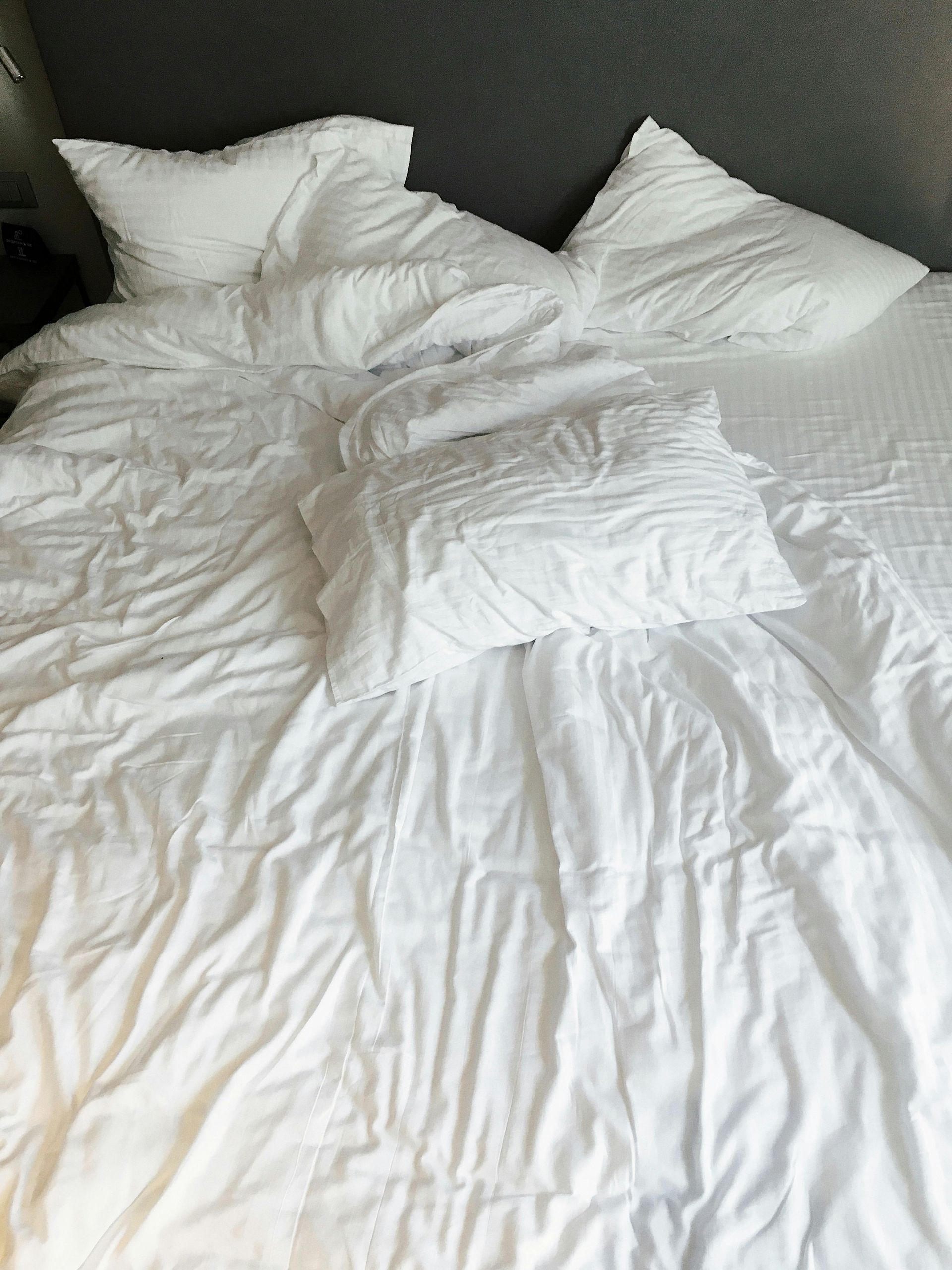
Pre-wash a set of clean sheets, towels, and a blanket. Same idea — sealed in a plastic bin, kept somewhere high and dry. If you come back to a damaged home or get displaced, having clean linens you can trust is a huge mental relief.
Move sentimental items to higher ground. Wedding dresses, military uniforms, baby clothes you've kept, family quilts — anything you can't replace. Put them in plastic bins, on a high shelf or upstairs, sealed against moisture. Don't trust closet floors. Don't trust garages.
Clear out anything on the floor.
This is the one most people skip. Hampers, dog beds, throw pillows, decorative blankets — anything sitting on the floor is the first thing to soak up water. Get it up off the ground.
During the Storm: Don't Run Laundry. Seriously.
This sounds obvious, but every year someone tries it. Don't run a load of laundry during a hurricane.
A few reasons:
- Power surges destroy washers and dryers. A single surge can fry your control board.
- Sewer backflow is real. During heavy flooding, Houston's drainage system can backflow into homes through laundry standpipes. Running a load makes this worse.
- You don't want wet clothes mid-storm. If the power cuts mid-cycle, you're left with a tub of soaking wet laundry that'll start smelling within hours.
If a storm is actively affecting your area, leave the washer alone. Whatever's dirty can wait.
After the Storm: The Cleanup Most People Get Wrong
This is where most damage gets done — not during the storm, but in the 24 to 72 hours after. Houston humidity plus standing water plus warm temperatures equals mold within 48 hours. Speed matters.
Here's the right order to handle things.
Step 1: Triage what got wet.
Sort affected items into three piles:
- Probably savable: Clothes that got damp from humidity, items that touched clean rainwater, things that were sealed in bins that got a little wet on the outside.
- Maybe savable: Clothes exposed to floodwater for a few hours, bedding that got rained on through a window, items in a slightly flooded closet.
- Probably not savable: Anything submerged in floodwater for more than a few hours, anything that smells strongly of sewage, mattresses, pillows, and most upholstered items that absorbed contaminated water.
A hard truth: floodwater in Houston is rarely just water. It's runoff from streets, lawns, sewer lines, and chemical containers. Items that were fully submerged in floodwater are often not safe to keep, no matter how much they're washed.
Step 2: Get wet items out of the house immediately.
If items are merely damp from humidity, get them into airflow. Open windows if it's safe, run fans if you have power, or move them to a dry room. If items are wet from rain or flood exposure, get them outside or onto a covered porch. Don't leave wet laundry sitting in a hamper or on the floor — that's how mold takes hold within hours.
Step 3: Wash flood-exposed items separately.
Do not put flood-exposed clothes in with regular laundry. Cross-contamination is real. When you can wash them:
- Pre-rinse with cold water in a utility sink, hose, or bathtub to remove the worst of the dirt.
- Wash on the hottest setting the fabric can handle.
- Use a heavy-duty detergent and add a cup of white vinegar to the rinse cycle to help with odor.
- Run an extra rinse cycle.
- Air dry in sunlight if possible — UV helps kill remaining bacteria and mold spores.
You may need to wash items two or three times to fully remove odor. If something still smells after three washes, it probably needs to be discarded.
Step 4: Address mold quickly.
If you see mold spots on clothes or linens, act fast:
- Soak the item in a solution of cold water and oxygen-based bleach (like OxiClean) for several hours.
- Wash on hot with detergent.
- Inspect carefully before drying — heat sets mold stains permanently.
- Repeat if needed.
Bleach works on whites only. For colored items, stick with oxygen-based products.
Step 5: Know when to let go.
Some items are not worth saving:
- Mattresses and box springs that absorbed floodwater
- Most pillows after sewage exposure
- Upholstered furniture cushions that stayed wet for more than 48 hours
- Items with mold growth that's gone deep into the fabric
It feels wasteful, but holding onto contaminated items is how respiratory issues start. When in doubt, throw it out.
When You'd Rather Not Deal With Any of This
We get it. After a storm, the last thing you want to do is spend three days running laundry. Hyperloop Laundry handles flood-damaged and storm-affected items with separate-batch processing, heavy-duty cleaning, and careful inspection — so you don't have to.
We offer:
- Free pickup and delivery across the Houston metro area
- Heavy-duty cleaning for storm and flood-affected laundry
- Commercial restoration laundry for property managers, restoration companies, and landlords with multiple units to recover
- Bulk linen and bedding recovery for Airbnb hosts and short-term rental owners
If you're recovering from a storm — or want to get ahead of one — we can pick up at your door, often within 24 hours.
A Quick Pre-Storm Checklist to Save This Page
Before the next storm, work through this list:
- Run all dirty laundry or schedule a pickup
- Wash one set of storm clothes per family member, sealed in a plastic bin
- Wash a set of clean sheets and towels, sealed in a plastic bin
- Move sentimental items to higher ground in sealed bins
- Clear hampers, blankets, and dog beds off the floor
- Save Hyperloop's contact info: 281-542-8236
Storms are part of life in Houston. Losing your favorite shirt or your kid's baby blanket doesn't have to be.
Ready to Try Houston's Most Affordable Laundry Delivery?
Hyperloop Laundry serves the entire Houston metro area with free pickup and delivery, 24-hour turnaround, and pricing that starts at $1.79 per pound. No hidden fees, no contracts, no minimums beyond a single 15-pound order.
Keep your focus on your workout—we’ll handle the sweat! Contact Hyperloop Laundry today to schedule a pickup.
📞 Call us now: 281-582-8236 Fresh gear. No funk. Fast delivery!